

YMCA Ukraine builds the foundations for social healing
December 18, 2025
Martiina Woodson
Mental health issues and social polarisation are making it hard for Ukrainians to cope amid a large-scale war that has lasted for almost four years. Civil society organisations support social healing and lay the foundations for Ukraine’s future.
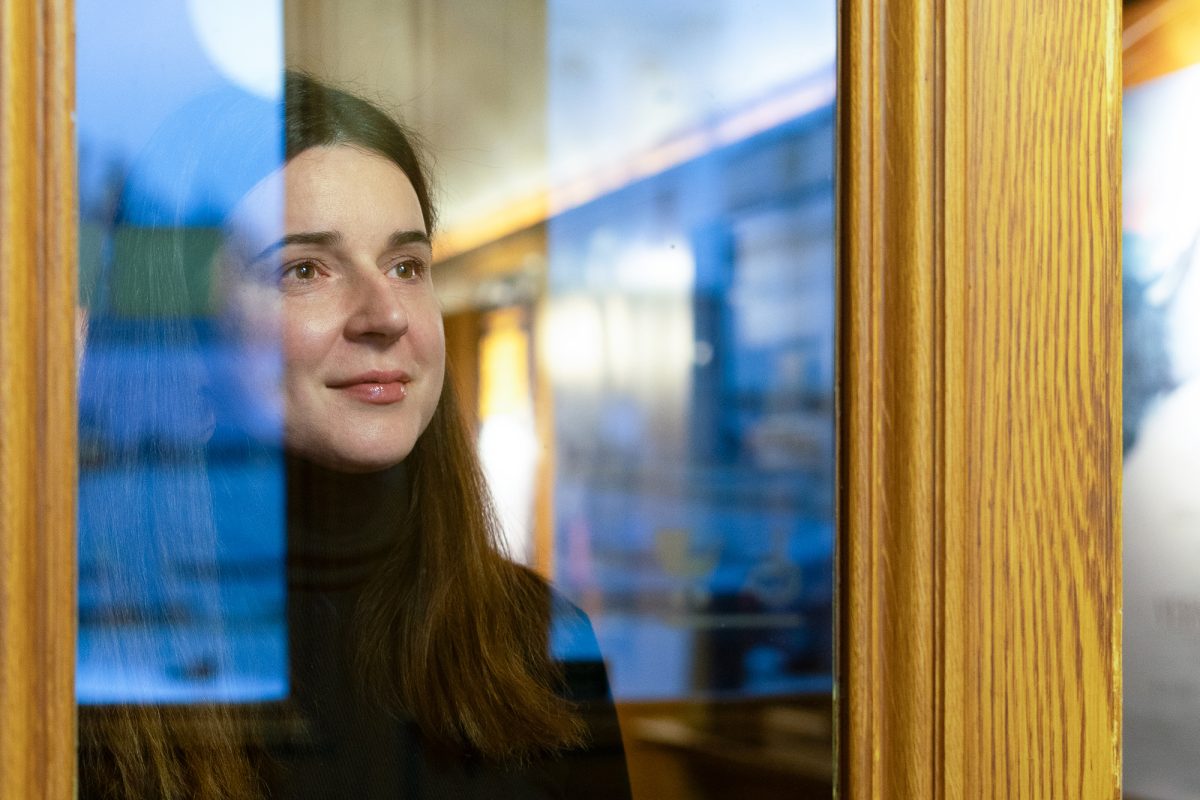
Our partner, YMCA Ukraine’s Secretary General Victoria Trofimova, attended a meeting of European YMCA leaders in Finland in mid-November. During her trip, she discussed the daily lives and struggles faced by young Ukrainians in the shadow of war.
The signs of the crisis are evident among the Ukrainians
Mental health challenges are severe in Ukraine following Russia’s decade-long war of aggression. Many struggle with exhaustion, depression, and traumatic experiences daily. According to an October 2024 assessment by the World Health Organization (WHO), 68% of Ukrainians reported a significant decline in their health during the war, and 46% reported suffering from mental health problems. Victoria Trofimova, Secretary General of YMCA Ukraine, states that psychological trauma affects everyone in Ukraine.
“Life in communities near the front lines is utterly unbearable, yet at the same time, all Ukrainians are suffering from the war in some way or another. The war constantly reminds them of its presence, through nighttime air raids and seeking shelter in bomb shelters, the loss of loved ones, interrupted education, job losses, or the fear of living under occupation,” Trofimova describes.
Finnish research has also addressed the mental health of Ukrainians, focusing specifically on young people’s experiences. A recently published large-scale time-trend study by the Research Centre for Child Psychiatry at the University of Turku, Finland, reveals that young people exposed to both phases of the war in Ukraine since 2014 exhibit symptoms of post-traumatic stress disorder (PTSD) and severe depression. The risk of self-harm is particularly concerning, with over 10% of young people having attempted suicide.
War polarises
The war has increased social polarisation between refugees and those remaining in the country, between front-line fighters and civilians, internally displaced persons and locals, and between those who have suffered loss and those who have not. Trofimova acknowledges that men are required on the front lines, but she also understands young people seeking to leave the country.
“It’s about people’s entire lives, and in war, there are only terrible choices. Living as a refugee is like existing between two worlds. Your thoughts revolve around the fate of your loved ones, and you feel guilty for leaving. If you choose to live in another country to seek new experiences, it feels very different from what you feel when you lose everything. Many refugees are more traumatised than those who remain in the midst of war. You carry the war inside you, whether you want to or not,” Trofimova describes.
Leaving may be simpler for those who believe they can support Ukraine by volunteering in Ukrainian communities abroad or, for instance, by donating money.
Trofimova is no stranger to these feelings. She spent the first two years of the war in Nuremberg, Germany, with her young son, working with Ukrainian refugees at the local YMCA. Those were long and challenging years for the family, with her husband working in critical infrastructure and Trofimova’s parents remaining in Ukraine.
Social healing is community healing
Amid a growing mental health crisis in Ukraine, there is a desperate shortage of psychologists, psychotherapists, and trauma treatment specialists. Insufficient training hampers a timely response to the urgent situation. Additionally, there is a lack of expertise in recognising victims of gender-based and sexual violence. The war has reinforced patriarchal norms, and a significant amount of shame surrounds reporting sexual violence.
Trofimova emphasises that Ukrainians cannot be left waiting for more professional actors and better practices. The needs are so great that organisations cannot afford to be paralysed by challenges or afraid of making mistakes. Instead, they must dare to try different approaches. Organisations have been considering how civil society could respond to the mental health situation with existing resources. Actors have joined forces, such as in the recent Women Rise projects, in which the Ukrainian YMCA and many women’s organisations, such as the Ukrainian Women’s Fund (UWF), are working together to strengthen women’s mental health and professional agency during the crisis. One of the goals has been to establish regional centres staffed by psychologists and social workers.
“We often discuss the importance of social healing in organisations. Many people have experienced trauma. That is why the least we can do is be a welcoming and inclusive society that accepts everyone, including soldiers returning from combat,” Tromova emphasises and asks: “Veterans are expected to reintegrate into society, but why aren’t we as a society also expected to help them and consider ways to best welcome those returning home?”
In many local YMCA organisations, peer groups have become the most popular activity. They provide a space to share experiences and build trust. Similar groups have been established for refugees in European YMCA organisations. Trofimova mentions YMCA Bavaria’s One for Another programme, in which Ukrainian women cherish traditions through cooking, art, and creative activities. There is also a high demand for traditional YMCA activities, such as camps. Funds raised by YMCA Europe have been used to organise camps for children of war veterans, internally displaced persons, and children from liberated areas. Dozens of Camp Europe camps have already taken place across Ukraine and Europe.
Democracy education to fight hopelessness
The reform of basic education in Ukraine, which started in 2015, integrated democracy education for children and young people into the curriculum. Civil society organisations are also supporting this effort through civic engagement and volunteer programmes. The aim is to teach democratic values and practices. Among other things, young people have discussed how democratic processes function, but especially how to practise democracy in everyday life.
Young people navigate conflicting experiences: a deep desire to defend and build their country clashes with personal trauma, loss, and the immediate need to survive. While war limits fundamental rights and fosters uncertainty, young individuals strongly wish to participate in change. These needs are addressed through democracy education.
“We think a lot with young people about what we can do to ensure that democracy is not just a word among many others, but something we can practice ourselves, in small and large steps,” Trofimova says, continuing: “Reflecting on topics related to democracy is difficult. How can we discuss, for example, the resolution on Youth, Peace and Security when we have neither peace nor security? Especially at this time, discussions must start at the grassroots level, and the proposed solutions must be concrete.”
It is essential to provide young people with platforms where they can organise activities independently. Youth-led workshops have addressed topics such as Ukrainian history, the impacts of Russia’s war of aggression, young people’s sense of identity, and their views on the privileges and responsibilities associated with citizenship. Supporting young people’s opportunities to participate and be involved in social decision-making is crucial. Local YMCA organisations in Ukraine encourage young people to get involved in resident-led urban initiatives and support youth projects, such as events for internal refugees. Additionally, young people are encouraged to take part in city youth councils.
Ukraine needs its civil society
Trofimova emphasises that Ukrainians will require resources not only now but also when thousands of soldiers return from the front. The collective burden of years will only become apparent after the war ends, and addressing it will demand expertise and mental resources. Trofimova states that work needs to be done now.
“This is a marathon. We need to build our resilience while ensuring that we have sufficient individual and collective resources,” she summarises.
Despite challenging circumstances, Trofimova emphasises the aspects that give her hope. These include the Ukrainians’ ability to adapt to the situation, their courage to make difficult decisions, and their willingness to help others. The support of global YMCA partners, such as YMCA Finland, also enables effective work in the crisis.
Although it is not yet known when the war will end, it is clear that actors such as YMCA Ukraine will be involved in rebuilding the country. A Chatham House study analysing the post-Crimea war period shows that Ukrainian civil society organisations will play a crucial role in the recovery from the war. The study indicates that when designing the country’s future architecture, special care must be taken to ensure civil society is included. The strengths of these organisations lie in their resilience, rapid and agile response, and inclusive approach to shaping the future. Additionally, civil society organisations perform an irreplaceable role: they create and uphold social cohesion. YMCA Ukraine also fosters this community spirit by bringing people together and strengthening solidarity.
YMCA Finland supports the activities of YMCA Ukraine through its development cooperation programme and the humanitarian aid funding we have just received. The humanitarian aid is used in particular to support children and young people living near the front line in eastern Ukraine, whose daily lives are overshadowed by constant insecurity and the losses caused by the war.
Contact us
Liisa Perkkiö
Head of International Programme
YMCA Finland
+358 50 549 2227
liisa.perkkio@ymca.fi